Before you proceed reading this post, please consider that is reported in the DISCLAIMER section in the About the author page. As today I am an active volunteer with the PMI Belgian Chapter, I want to clearly remark that the opinions and content shared in this blog are entirely personal and do not represent the views, policies, or endorsements of PMI, the PMI Belgian Chapter, or any related entity.
That being said..
I’m now halfway through my preparation for the PMI-PMOCP certification, and this reminds me of my previous journey to get the PMP. In both cases, I feel that the most important part is not the exam, but the learning process. Studying always helps me to grow and improve my understanding of project management.
But during this journey, I made an important decision that I want to share with you
(and maybe even discuss with those who think differently).
I decided to finish studying the whole guide, but I will not take the certification exam.
The reason is simple: I realized something deeper while studying :
The Traditional PMO Is Not Enough
I work in large enterprise environments, and I see more and more that the traditional PMO model is not enough. It does not fully reflect the real value this kind of structure should deliver.
We are living in the middle of the Fourth Industrial Revolution, with technologies like Artificial Intelligence, Cloud Computing, and the Internet of Things changing everything.
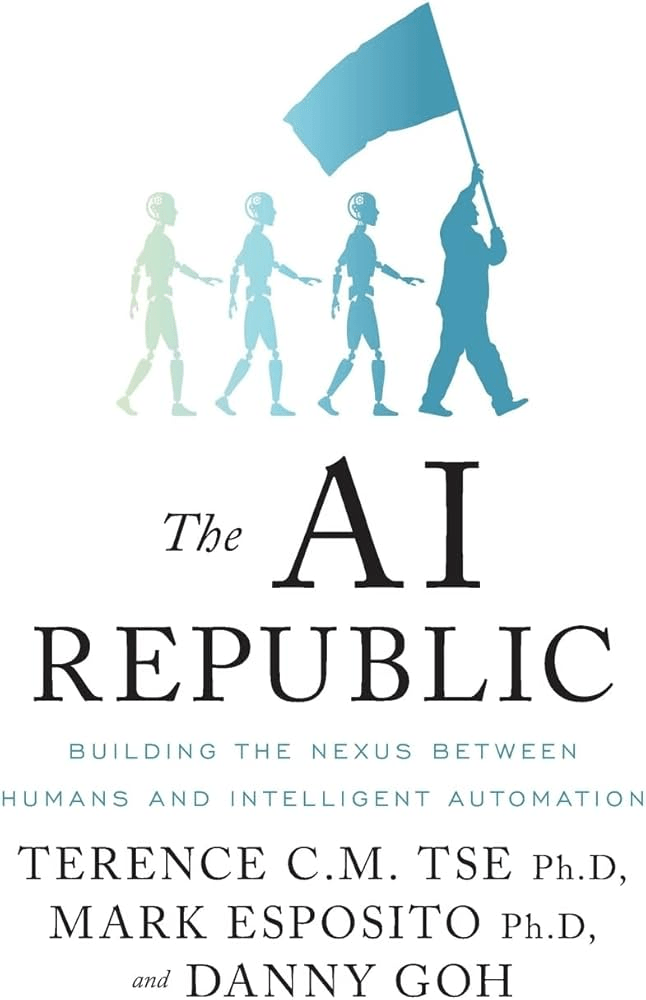
I follow with great interest the work of Professor Mark Esposito. One of the most important takeaways after having heard his speeches and reading his books and publications is that, we can talk a lot about using Generative AI, but if we don’t change the way we work the way we even conceive our way of working, GenAI will just remain the major tool for writing meeting notes or summarizing articles.
New challenges require a new way of thinking.
Today, we try to convince executives that PMOs are valuable, and we train project managers to use PMO services in the right way. But when I look at the situation in many companies, I think we are focusing on the wrong goal.
Not because we are doing a bad job, but because the PMO idea needs to evolve. Even when new expertise exists, it’s often fragmented across different departments, and many PMO leaders are not fully equipped to face these new challenges.
Many big companies are still very “analog”. In these cases, it’s very hard to use the full power of new technologies.
Before asking “What can GenAI do for project management?”, we should completely rethink how we work—tearing down existing models and rebuilding them from scratch, like we used to do with LEGO bricks.
It’s a natural law: if we don’t evolve, we risk extinction.
The xMO Is the Next Step
Before writing this article I did a short research online and I was very much surprised to see how the need to evolve from the conventional concept of PMO so something new was already intercepted this PMI-PWC jointly published document in 2023.
I read this article and somehow is a good starting point marking somehow the areas and characteristics the modern project Management office should have :
| Aspect | Traditional PMO | XMO (eXtended Management Office) |
| Main Focus | Processes, compliance, reporting | Strategic value, business alignment, outcomes |
| Role Perception | Administrative, support function | Strategic enabler and transformation partner |
| Scope of Services | Project governance, templates, tracking | End-to-end value management, innovation support, resource strategy |
| Customer Orientation | Internally focused (project teams) | Externally and internally focused (all stakeholders & business units) |
| Decision-making | Operational and reactive | Strategic and proactive |
| Adaptability | Rigid, one-size-fits-all processes | Tailored, flexible to organizational context |
| Performance Metrics | Deliverables, time, cost, scope | Business outcomes, value realization, customer satisfaction |
| Organizational Alignment | Limited strategic integration | Full alignment with strategy and enterprise goals |
| Culture Contribution | Enforcer of methods and standards | Culture builder: collaboration, learning, psychological safety |
| Technology Integration | Project tools (Gantt, dashboards) | Digital platforms, data analytics, AI-enabled decision support |

In big companies, project managers have many responsibilities. They need different skills: strategic, technical, communication, organizational. A traditional PMO is not enough anymore.
Too often, a PMO is seen only as a place for rules and procedures. But today’s challenges—like the digital revolution—need more than that.
This is where the xMO becomes important.
An xMO should be not just a project office. It is a strategic structure. It connects people, tools, data, and culture. It is flexible, supports innovation, and helps the company deliver real business value.
AI Engagement Transparency Matrix
| Area of Application | Performed By |
| Literature Research | Author |
| Literature Processing | Author |
| Reference Formatting | ChatGPT |
| Concept Clarification | Author |
| Editing | Author |
| Refinement | ChatGPT |
| Visual Aids | ChatGPT (SORA) |
| Fact and Citation Checking | Author |
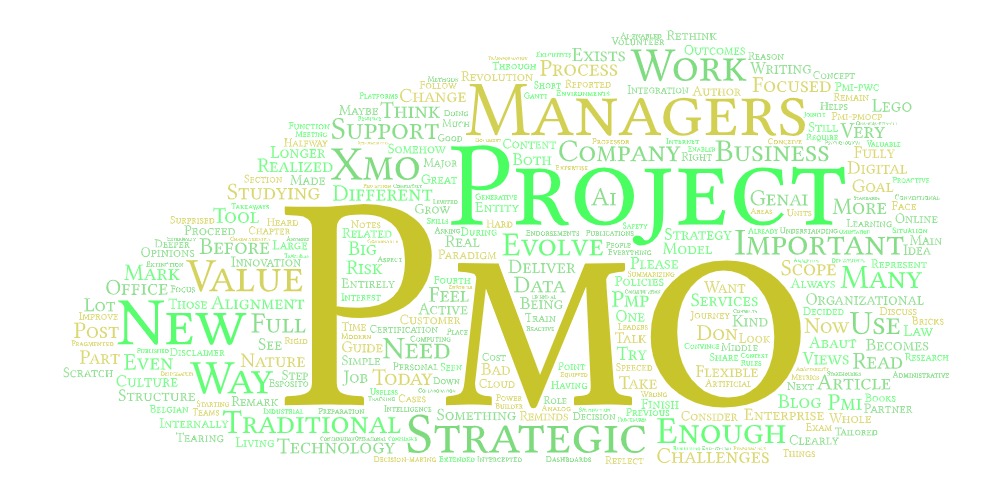
Article Word Cloud
 ProjectAbility